On this page
Alcohol clearance time by drink type
The table below shows average clearance times for typical pub and home pours, based on the NHS standard rate of 1 unit per hour plus a 30-minute absorption baseline:
| Drink & Pour Size | ABV | UK Units | Pure Ethanol | Average Clearance Time |
|---|---|---|---|---|
| Single spirit measure (25 ml) | 40% | 1.0 unit | 7.9 g | ~1 to 1.5 hours |
| Double spirit measure (50 ml) | 40% | 2.0 units | 15.8 g | ~2 to 2.5 hours |
| Half pint of session beer (284 ml) | 4.0% | 1.1 units | 9.0 g | ~1.5 hours |
| Pint of 4.5% lager (568 ml) | 4.5% | 2.6 units | 20.2 g | ~2.5 to 3 hours |
| Pint of 7.5% vintage cider (568 ml) | 7.5% | 4.3 units | 33.6 g | ~4.5 to 5 hours |
| Standard glass of wine (175 ml) | 13% | 2.3 units | 18.0 g | ~2.5 to 3 hours |
| Large glass of wine (250 ml) | 13% | 3.3 units | 25.6 g | ~3.5 to 4 hours |
| Bottle of Champagne (750 ml) | 12% | 9.0 units | 71.0 g | ~9 to 10 hours |
| Bottle of wine (750 ml) | 13% | 9.8 units | 77.0 g | ~10 to 11 hours |
Note: When drinks are consumed back-to-back, clearance times are additive. Drinking four pints of 4.5% lager (10.4 units) requires over 10 hours from the final drink to reach zero blood alcohol.
Detection windows: blood, breath, and urine
Different testing methods detect alcohol and its metabolic byproducts across varying timeframes:
- Blood Tests: Directly measure circulating ethanol. Detectable for up to 10 to 12 hours after heavy consumption.
- Breathalyzer Tests: Measure ethanol vapor exhaled from the alveoli in the lungs. Detectable for 12 to 24 hours.
- Standard Urine Tests: Measure parent alcohol filtered through the kidneys. Detectable for 12 to 24 hours.
- EtG Urine Tests (Ethyl Glucuronide): Measure a liver enzyme biomarker created when alcohol is metabolised. Detectable for up to 72 to 80 hours (3 to 4 days) after drinking has ceased.
- Hair Follicle Tests: EtG incorporated into hair fibers can identify chronic heavy consumption patterns over a 90-day window.
Debunking common sobering-up myths
Countless internet remedies claim to rapidly eliminate alcohol from your body. Medical science disproves every one:
- Black Coffee: Caffeine is a central nervous system stimulant. It may make you feel subjectively more awake, but your blood alcohol concentration and motor impairment remain identical.
- Cold Showers: Cold water causes vasoconstriction and adrenaline release, but does not increase liver hepatic blood flow or enzyme activity.
- Heavy Meals After Drinking: Food in the stomach only slows absorption if eaten before or during drinking. Eating a greasy kebab after alcohol is already in your bloodstream has zero effect on clearance speed.
- Drinking Pints of Water: Hydration helps ease dehydration and morning headaches, but kidneys cannot excrete unmetabolised ethanol in significant amounts.
Why phone apps should not estimate blood alcohol
Many drink apps present animated "BAC curves" claiming to predict when you will be legal to drive. Because enzymatic rates vary between individuals based on genetics, stomach contents, body fat percentage, and medication, these formulas (like the Widmark equation) carry an error margin of up to 40%.
Relying on an app to judge whether you can drive is biologically unsound and legally dangerous. Modraly intentionally never displays estimated blood alcohol curves. Read our medical stance on why we don't calculate blood alcohol.
Staying mindful with Modraly
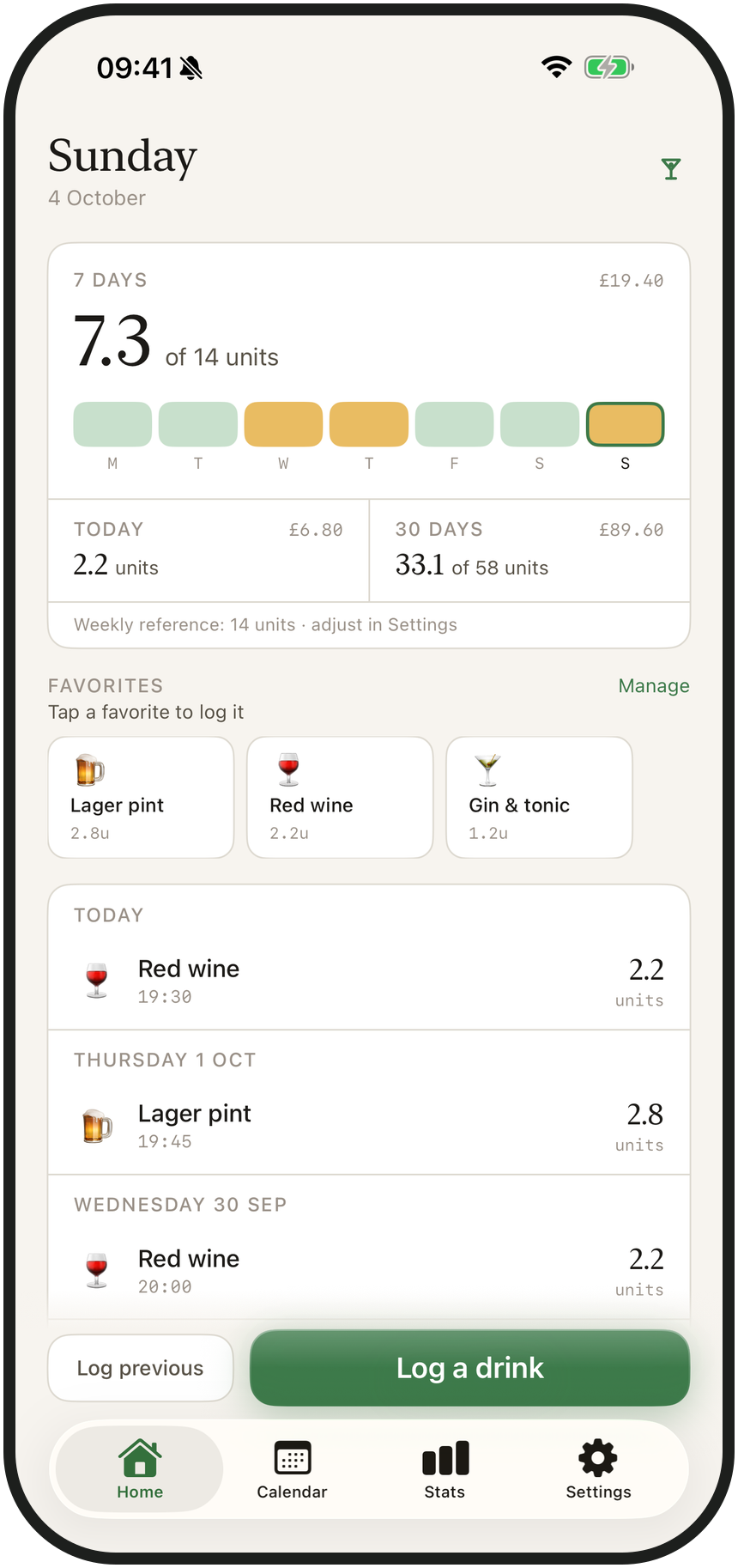
The only reliable way to manage elimination time is to keep your intake within clear, measured boundaries. Modraly tracks your drinks in real units and pure grams, syncing privately with Apple Health and allowing one-tap logging from your Apple Watch without streak guilt.

Free to download. Unlimited drink and unit logging on iPhone & Apple Watch.
Frequently asked questions
How fast does the human body clear alcohol?
On average, a healthy human liver metabolises pure alcohol at a fixed biological rate of roughly 1 UK unit (8 grams of pure ethanol) to 10 grams per hour. This speed is determined by enzyme capacity and cannot be accelerated by drinking water, black coffee, or taking cold showers.
How long does a pint of beer take to leave your system?
A standard UK pint (568 ml) of 4.5% beer or cider contains roughly 2.6 UK units. After an initial absorption window of 30 to 60 minutes, it takes approximately 2.5 to 3 hours for the alcohol to completely clear from your bloodstream.
How long does a bottle of wine stay in your body?
A standard 750 ml bottle of 13% wine contains 9.8 UK units (77 g of pure alcohol). It takes between 9 and 11 hours for the liver to metabolise that amount of ethanol. If finished late at night, significant alcohol remains in your bloodstream the following morning.
What are the detection windows for blood, breath, and urine tests?
Alcohol can typically be detected in the blood for up to 12 hours, on a breathalyzer for 12 to 24 hours, and in standard urine tests for 12 to 24 hours. Specialized urine tests detecting Ethyl Glucuronide (EtG) metabolites can detect consumption for up to 72 to 80 hours.
Can you speed up alcohol elimination by sleeping or exercising?
No. Over 90% of alcohol elimination is conducted strictly by liver enzymes (Alcohol Dehydrogenase and CYP2E1), while only 2% to 5% is excreted through breath, sweat, and urine. Exercise and sleep do not increase enzymatic breakdown.