On this page
Why Damp January works when Dry January fails
The fatal flaw of traditional Dry January is its reliance on the streak counter. When a challenge demands 31 consecutive alcohol-free days, having a glass of champagne at a birthday on 12 January officially ruins the attempt. Behavioral psychology calls this the abstinence violation effect: once the streak breaks, the entire remaining month quietly reverts to baseline drinking.
Damp January changes the metric. Instead of asking "Did you drink yesterday?", it asks "How many units did you drink this week?". If your target is 14 units and you drink 10, the week is a success—regardless of whether those 10 units were spread over two or three evenings.
Three rules for a successful Damp January
Because Damp January has no official governing body, success depends on setting concrete, measurable boundaries before 1 January:
- Set a weekly unit ceiling: In the UK, the Chief Medical Officers advise no more than 14 units of alcohol per week (about six pints of 4% lager or six medium glasses of wine). Use that as your absolute ceiling.
- Schedule 3 to 4 alcohol-free days: Spread your drinking over fewer evenings. Consecutive alcohol-free days give your liver and sleep cycles time to recover.
- Log every pour accurately: A double gin is two units, a 250 ml pub glass of wine is over three units. Calculate the real numbers with the alcohol unit calculator so you are measuring reality, not guesswork.

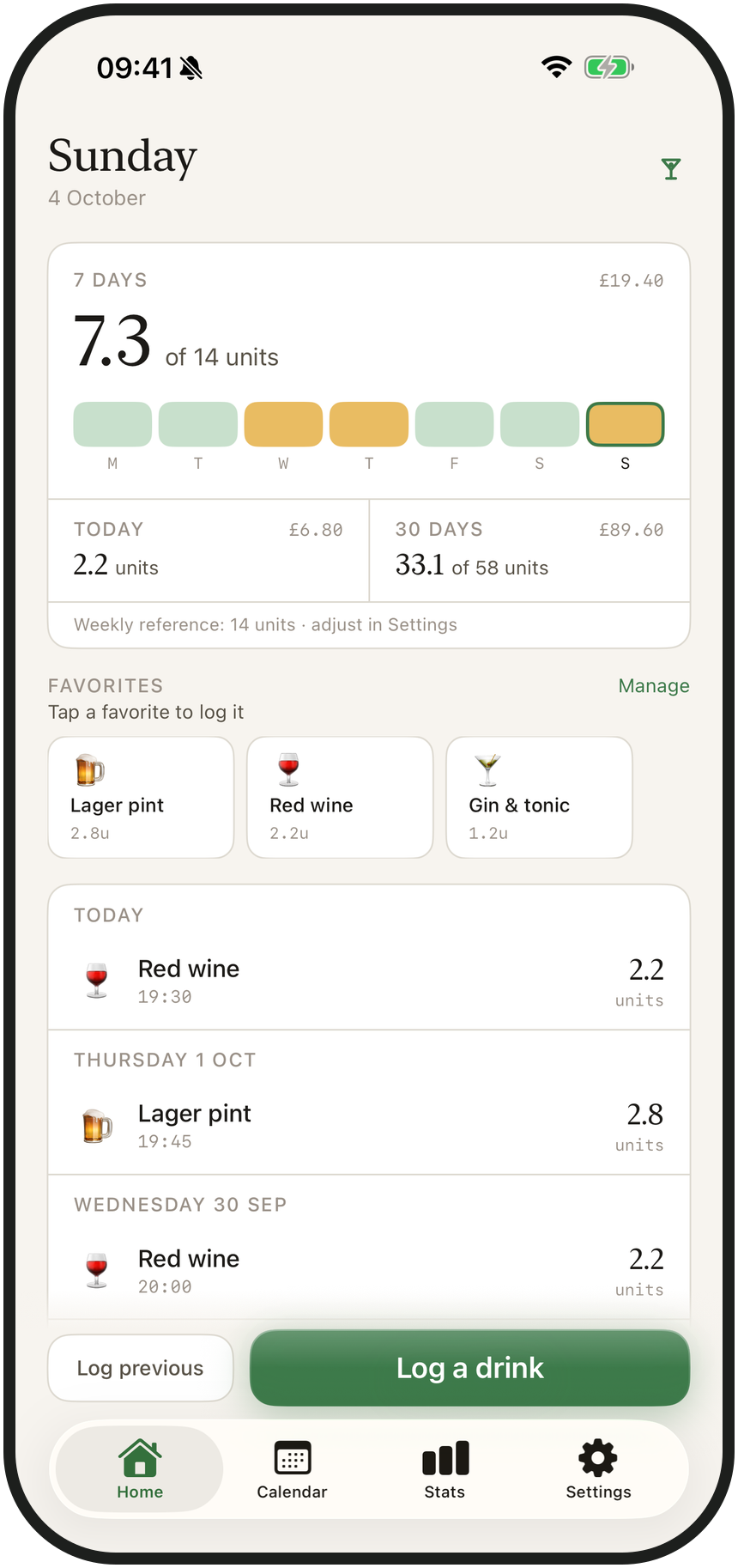
Track Damp January in UK units, with no streaks and no account.
Dry January vs. Damp January: side by side
| Dimension | Dry January | Damp January |
|---|---|---|
| Target | 0 drinks for 31 days | Pre-set weekly ceiling (e.g. ≤ 14 units) |
| Psychological metric | All-or-nothing streak counter | Weekly volume and trend reduction |
| When you drink | Streak resets to 0 (feeling of failure) | Logged into your weekly total (nothing resets) |
| Social flexibility | Zero alcohol at events or dinners | Planned drinks (e.g. 2 glasses on Friday) |
| Long-term habit shift | High rebound rate in February | Builds lasting moderation habits for the year |
How to track Damp January on iPhone
Most drink tracking apps were designed for either recovery or social gamification. Sobriety apps demand daily pledges and reset your counter when you log a drink. Fitness apps bury alcohol in general food logs without tracking weekly health guidelines.
Modraly was built specifically for Damp January. It sits quietly on your iPhone, iPad, and Apple Watch: two taps to log a drink, instant unit conversion, and your weekly total displayed right next to the UK 14-unit guideline. No account, no ads, and no shame.
Frequently asked questions
What is Damp January?
Damp January is a moderation challenge that replaces total abstinence with mindful reduction throughout January. Instead of quitting entirely, participants set clear weekly unit limits, introduce several alcohol-free days, and track every drink without streak pressure.
What are the rules of Damp January?
Unlike Dry January, there are no rigid external rules. You decide your boundaries before 1 January: typically keeping under the official weekly guideline (14 UK units), scheduling 3 to 4 alcohol-free days each week, and avoiding binge occasions.
How is Damp January different from Dry January?
Dry January demands 31 consecutive zero-alcohol days, where a single drink resets your streak to zero. Damp January focuses on overall volume reduction: having two drinks on a Friday night is simply recorded into your weekly total rather than counted as a failure.
What is the best tracker app for Damp January?
Most sobriety apps focus on unbroken streaks and reset your counter when you drink. Modraly is built specifically for moderation: it counts units, spend, and calories next to your country's weekly guideline with no streaks, no account, and no guilt.
What are the health benefits of Damp January?
Health research shows that cutting alcohol intake by 50% or more significantly improves sleep architecture, reduces blood pressure, lowers liver enzymes, and saves money. The biological benefits come from reducing total ethanol exposure, not from achieving perfection.